Canoeing/Kayaking
The kayak originated as a hunting craft used by Arctic peoples, whilst the Canadian canoe evolved from the dugout canoes of the Native Americans; the modern sport took shape in Europe in the late 19th century and has been an Olympic discipline since the 1936 Berlin Games.
Descrizione
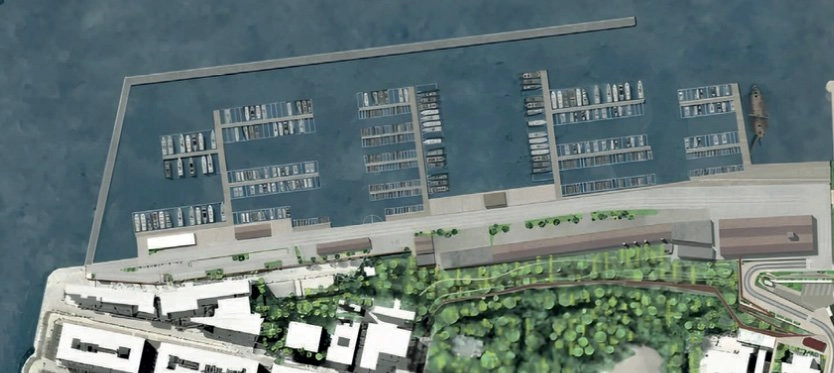
Canoes and kayaks are two different types of boat and two different ways of being on the water: in a kayak (abbreviated to K), you sit with your legs stretched out and use a double-bladed paddle; in a Canadian canoe (abbreviated to C), you kneel and paddle on one side only with a single-bladed paddle. In flat-water sprinting, competitors race on straight courses, lane by lane, with a standing start and distances ranging from 200 to 1,000 metres. The origins are practical: the kayak is the hunting craft of Arctic peoples, whilst the canoe derives from the dugout canoes of the Native Americans. The modern sport emerged in the mid-19th century with the first European clubs; it made its Olympic debut as a demonstration sport in 1924 and became an official discipline at the 1936 Berlin Games; today, the international calendar is managed by the International Canoe Federation, founded in 1946. Competition requires power, stroke rate and the ability to keep the boat balanced: in short races, paddlers exceed 120 strokes per minute, whilst in longer races, pacing is key. Double crews must be perfectly synchronised, as any imbalance results in a loss of speed. At the 20th Mediterranean Games in Taranto in 2026, canoe sprint will open the programme: competitions will take place from 21 to 23 August at Parco Cimino, the rowing centre on the Mar Piccolo, with six titles up for grabs — Men’s K1 1000 and C1 1000, Men’s K2 500, Women’s K1 500 and K2 500, and Women’s C1 200.
Regolamento
- 1Kayak (K): seated, double-bladed paddle. Canadian canoe (C): kneeling, single-bladed paddle
- 2In sprint events, competitors race in lanes on flat water, with a standing start and alignment at the starting blocks
- 3Straying from one’s lane or obstructing an opponent results in disqualification
- 4The course is 200, 500 or 1,000 metres depending on the discipline and category
- 5In Taranto, six titles will be contested from 21 to 23 August at Parco Cimino, the rowing centre on the Mar Piccolo
Calendario Gare
3 giornate- 10:30 - 11:15MK1 1000m e MC1 1000m — Batterie (Uomini)QualificazioniMaschile Parco Cimino - Centro Remiero
- 11:15 - 12:00WK1 500m — Batterie (Donne)QualificazioniFemminile Parco Cimino - Centro Remiero
- 9:00 - 9:45MK2 500m — Batterie (Uomini)QualificazioniMaschile Parco Cimino - Centro Remiero
- 9:45 - 10:30WK2 500m — Batterie (Donne)QualificazioniFemminile Parco Cimino - Centro Remiero
- 12:00 - 12:20MK1 1000m e MC1 1000m — Semifinale (Uomini)QualificazioniMaschile Parco Cimino - Centro Remiero
- 12:20 - 12:40WK1 500m — Semifinale (Donne)QualificazioniFemminile Parco Cimino - Centro Remiero
- 9:00 - 9:20WC1 200m — Batterie (Donne)QualificazioniFemminile Parco Cimino - Centro Remiero
- 9:20 - 9:40MK2 500m — Semifinale (Uomini)QualificazioniMaschile Parco Cimino - Centro Remiero
- 9:40 - 9:50WK2 500m — Semifinale (Donne)QualificazioniFemminile Parco Cimino - Centro Remiero
- 9:50 - 10:00WC1 200m — Semifinale (Donne)QualificazioniFemminile Parco Cimino - Centro Remiero
- 11:30 - 11:45MK1 1000m e MC1 1000m — Finale (Uomini)Maschile Parco Cimino - Centro Remiero
- 11:45 - 12:00WK1 500m — Finale (Donne)Femminile Parco Cimino - Centro Remiero
- 9:00 - 9:10WC1 200m — Finale (Donne)Femminile Parco Cimino - Centro Remiero
- 9:10 - 9:20MK2 500m — Finale (Uomini)Maschile Parco Cimino - Centro Remiero
- 9:20 - 9:30WK2 500m — Finale (Donne)Femminile Parco Cimino - Centro Remiero
Disponibilità, orari e turni possono subire variazioni: verifica sempre il programma ufficiale il giorno della gara.