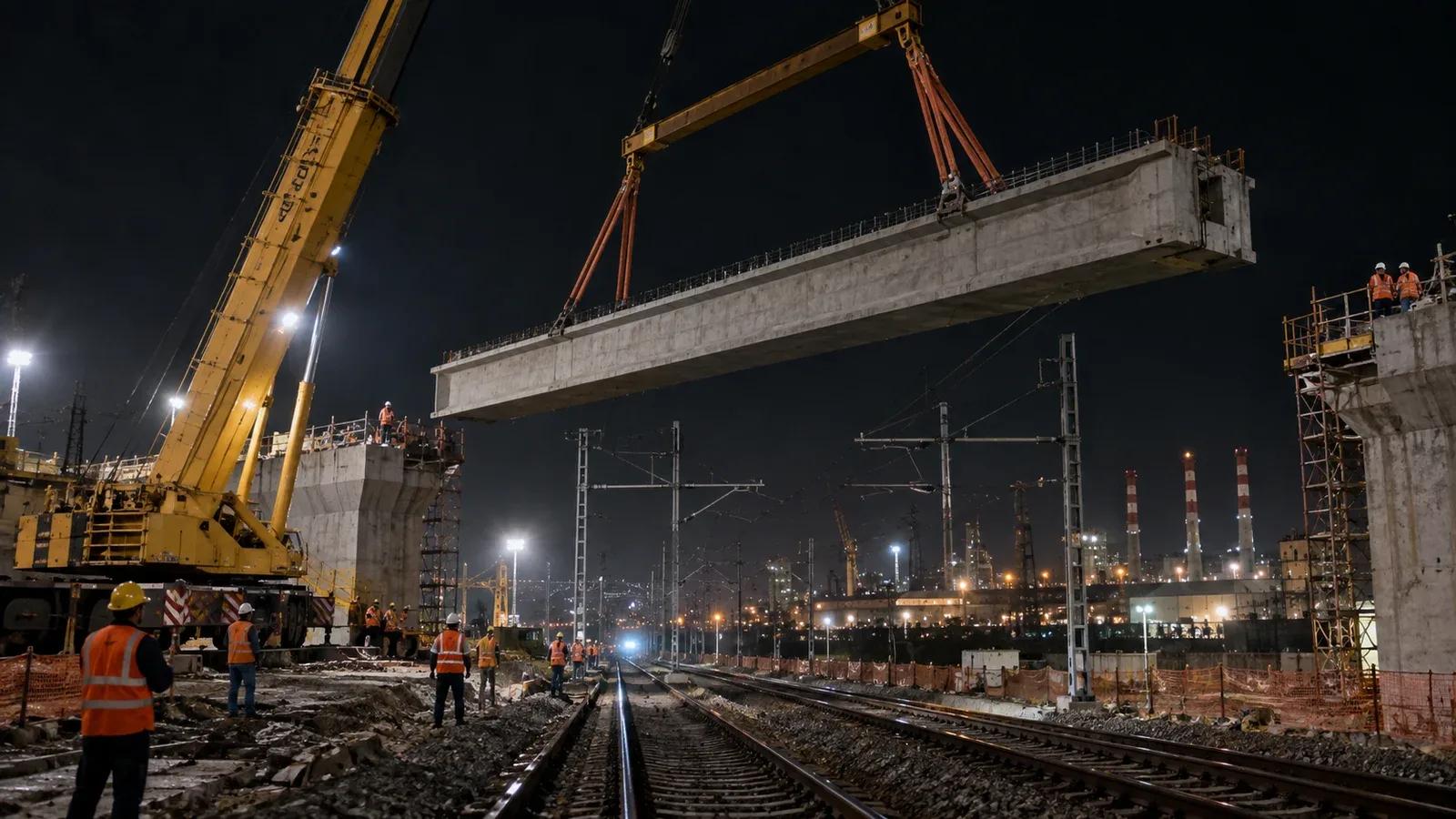
Three 34-metre beams to unite via Colombo and via della Croce above the tracks. After the first on 23 September, it's time for the last one
Tonight, between Monday 28 and Tuesday 29 September, the installation of the last beam of the railway overpass in the Croce area is scheduled: one of the most delicate stages of the BRT Red Line. The first beam was placed during the night between Tuesday 22 and Wednesday 23 September. An imposing structure — 34 metres long and weighing approximately 110 tonnes — representing the first piece of a 100-metre-long overall structure, designed to connect via Cristoforo Colombo with via della Croce, crossing the railway bundle that currently separates the two areas of the city.
For those living in Taranto, especially in the neighbourhoods affected by the BRT route, this is a moment that makes a mobility project tangible, which until a few months ago remained mainly on paper. The overnight installation of a beam of this size is not just a technical spectacle: it is a sign that the reorganisation of urban transport is taking shape, day by day.
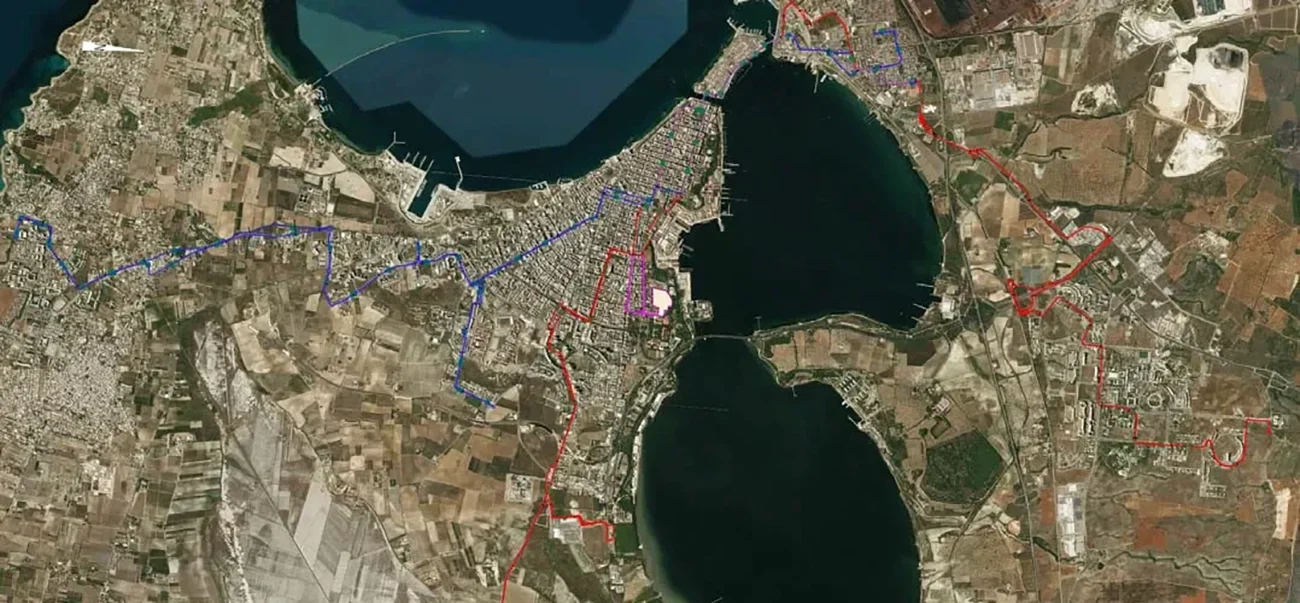
The BRT Red Line (Bus Rapid Transit) is a dedicated-lane public transport system, designed to connect different neighbourhoods of Taranto through a fast, protected bus service. The work is coordinated by the municipal administration, with Councillor for Urban Planning and Mobility Giovanni Patronelli at the forefront in commenting on progress.
The project is part of a broader strategy for redeveloping urban and suburban mobility, funded with public resources and designed to reduce the environmental impact of travel. The railway overpass in the Croce area is one of two railway crossings planned along the route: the second will connect via Grazia Deledda with via Galeso, towards Paolo VI.
According to the press release from the Municipality of Taranto and reconstructions by local media, the first beam was installed during the night between Tuesday 22 and Wednesday 23 September. It is a prefabricated element, 34 metres long and weighing approximately 110 tonnes, lifted and positioned with millimetric precision by construction machinery.
The work schedule continues according to a tight timeline:
The overall structure will reach 100 metres in length and will allow the Red Line to cross the railway bundle, enabling the connection between the two sides of the railway and reaching the area designated for the second access front of the railway station.
The overpass is not an isolated structure, but a strategic node of a more complex mobility system. On the via della Croce side, in fact, the construction of the new bus terminal and a park-and-ride facility is planned, essential elements for reorganising accessibility to Taranto railway station.
For the city, this means:
Councillor Patronelli emphasised how the project represents "a comprehensive plan for the redevelopment and enhancement of urban and suburban mobility", with the aim of "improving the quality of travel for the people of Taranto and reducing the environmental impact".
In the broader context of the city, the BRT is part of a phase of infrastructural transformation that also involves the port, urban road network and the reconversion of industrial areas. Although the issue of Ilva and industrial reconversion remains central in city discussions, mobility projects represent a concrete aspect of the vision of Taranto that the administration is trying to build.
In the coming days, attention will focus on adherence to the timeline. If work proceeds as planned, by the night between 28 and 29 September the overpass will have its supporting structure completed, with all three beams in place.
From that moment, the subsequent phases will begin:
The open questions remain those related to the overall completion times of the Red Line and its actual operation. The installation of the first beam, however, represents a positive signal: the project is not stalled, and construction sites are progressing.
For residents of areas such as Croce, Paolo VI and Pineta Cimino, the next month will be characterised by night-time construction activities. It is advisable to stay informed through press releases from the municipal administration for any possible traffic disruptions.
The BRT project, as a whole, remains one of the symbols of Taranto's will to rethink its mobility and urban layout. Each beam installed is a concrete step towards that transformation.
 Taranto - Giulia Imperio torna e vince tutto: è campionessa europea nei 48 kg19 aprile 2026
 BRT Taranto: La rivoluzione della mobilità che collegherà i quartieri periferici al centro città1 aprile 2026