A natural pool of 1,600 square meters in the shadow of the island of San Paolo, the control room at Palazzo Amati, no public and no shows
There is a stretch of the Mar Grande, off the island of San Paolo, where in the coming months dolphins that have never seen the open sea will arrive. Born in tanks, raised between concrete walls and scheduled shows, they cannot be released: they would not know how to hunt, they would not know how to live in a pod. What can be done is to give them something that closely resembles the sea, and someone to watch over them twenty-four hours a day.
On August 4, 2026, the Puglia Region, with a council resolution, recognized and authorized the «San Paolo Dolphin Refuge»: the first Wild Animal Recovery Center (C.R.A.S.) specialized in cetaceans in Italy, entrusted to the management of the Jonian Dolphin Conservation ETS. It is Europe’s first marine sanctuary designed for dolphins exiting captivity, and it is in Taranto.
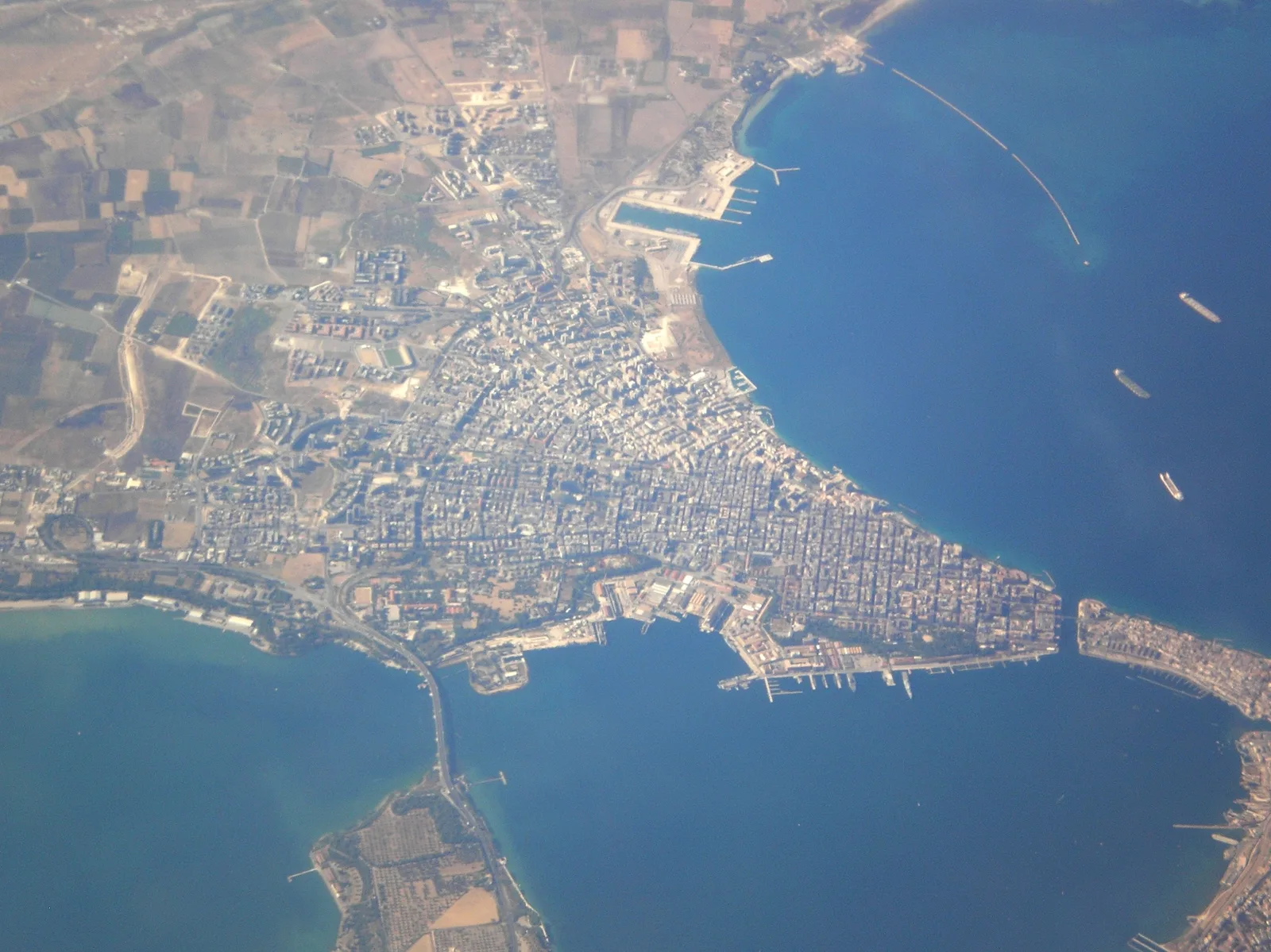
It consists of seven hectares of sea in the waters of the Mar Grande, sheltered by the island of San Paolo, the smallest of the Cheradi islands. Inside this protected area there is a natural pool of 1,600 square meters, delimited by nets and floating pontoons forty meters on each side, connected to a second pool and a platform for veterinary treatments.
Around, in the Gulf, bottlenose dolphins, striped dolphins, Risso’s dolphins, and sperm whales already swim freely: the waters of Taranto host seven of the eight species of cetaceans recognized in the Mediterranean. This is also why the site was chosen there.
The most interesting part of the regional measure is what it prohibits. Environmental education, it reads, will be carried out «exclusively in virtual mode through a dedicated Control Room, without direct public access to the facility and without any form of show, so as to guarantee the maximum well-being of the cetaceans».
Those who want to see the dolphins will see them on a screen, from the city. No ticket, no poolside tank, no command jumps. The agreement between the Region and JDC imposes three precise obligations in return: continuous environmental monitoring of the area, a stable presence of specialized technical and veterinary staff, and an annual scientific report on activities carried out and the health status of the animals.
The recognition, the resolution specifies, does not entail direct costs for the regional budget: construction, management, maintenance, health surveillance, and animal care are entirely borne by the managing entity. The Region provides coordination, through the Regional Wildlife Observatory, of which the sanctuary is now a part.
In Europe, over three hundred bottlenose dolphins live in captivity. The world of marine parks, however, is closing down: the French law of November 30, 2021 bans shows with cetaceans and their reproduction from December 2026, and the Marineland of Antibes — Europe’s largest marine zoo — closed its doors on January 5, 2025, getting ahead of the curve. In Italy, five dolphinariums and theme parks are still active.
When a facility closes, the question remains that no one had yet answered: where do the animals go? Returning them to the open sea is almost always impossible. Moving them to another tank means starting over. The San Paolo Dolphin Refuge is the third way — a real sea, enclosed and monitored, where an animal born in captivity can recover pieces of spontaneous behavior without having to survive on its own.
Carmelo Fanizza, founder and project manager, describes it as a «quiet retirement» after captivity and insists on one word: model. The sanctuary, he explains, is «an experimental and replicable model» that, in collaboration with European zoological facilities, «could foster the development of new protocols and infrastructures for the sustainable management and long-term well-being of cetaceans». Translated: if it works here, it will be copied elsewhere.
You don’t load it onto a truck and drop it into the sea. Veterinarian Monica Barnaba described a three-phase process: initial training at the source facility, approach to the destination site, and final adaptation inside the sanctuary. Coordination with the aquarium world goes through the EEP (European Ex-situ Programme) of EAZA, the European association of zoos and aquariums, whose representative Robert Gojceta, from the Oceanogràfic in Valencia, follows the Taranto project.
The idea was born in 2014 from the collaboration between Jonian Dolphin Conservation, the Fondazione con il Sud, and the Municipality of Taranto, and runs parallel to the restoration of Palazzo Amati and the birth of Kètos, the Euro-Mediterranean center for the sea and cetaceans. In 2023 came the maritime state concession, in 2024 the authorization as a C.R.A.S. and the funding from the joint call with the Municipality — a project worth 1,387,889 euros, of which 1,249,000 requested from the Foundation and the rest in co-financing. The total investment in the sanctuary is around two million euros, with fourteen organizations involved, including research institutes (there is the CNR), schools, social cooperatives, and neighborhood associations. At the presentation on November 6, 2025 at Palazzo Amati, the Embassy of Spain in Italy, a partner of the Fondazione con il Sud, was also present.
The offshore works were completed that autumn. «The structure must be completed to tackle the final step — Fanizza said then —. In the coming weeks, the floating laboratory will be positioned here, and the sanctuary will be ready.» Then the final ministerial authorization, and now the regional recognition. The first dolphins are expected by the end of 2026.
«With this recognition, the Puglia Region takes an important step in the protection of marine biodiversity — declares the regional councilor for Agriculture with delegation for fisheries and sea resources, Francesco Paolicelli — establishing for the first time in Taranto a regional center for the recovery of wild animals specialized in cetaceans, a highly qualified facility that strengthens the regional network dedicated to the safeguarding of marine fauna.» The sanctuary arrives just days after the inauguration of the Sea Turtle Clinic in Valenzano, the regional hospital for sea turtles: two pieces of the same network.
For Marco Imperiale, general director of the Fondazione con il Sud, the meaning of the project lies entirely in a demonstration: in Taranto, environmental protection and development are not opposing forces.
It is quite something, in a city that for fifty years has been told through a smokestack, to read a resolution that talks about the well-being of bottlenose dolphins and annual scientific reports. In these weeks, Taranto is full of guests who have arrived for the Mediterranean Games and looks at its sea as it hasn’t in a long time: from the Mar Piccolo that cleans itself to the seven hectares of the Mar Grande that are about to become a retirement home for dolphins.
In the meantime, if you want a bottlenose dolphin all to yourself without waiting until the end of the year, there is one swimming in the virtual Mar Grande of the dolphin game. The real one, by statute, will not perform shows for anyone.
Photo: Giles Laurent, Mastrocom, Ferdi2005 and Manuela Balestra, Wikimedia Commons, licenses CC BY-SA 4.0 and CC BY 4.0.
 Otto parchi intorno a Taranto: pronte le gare per i due sul mare5 settembre 2026
 Sulle sponde del Mar Piccolo · dal Santuario dei Marinai a San Pietro Marrese29 novembre 2026
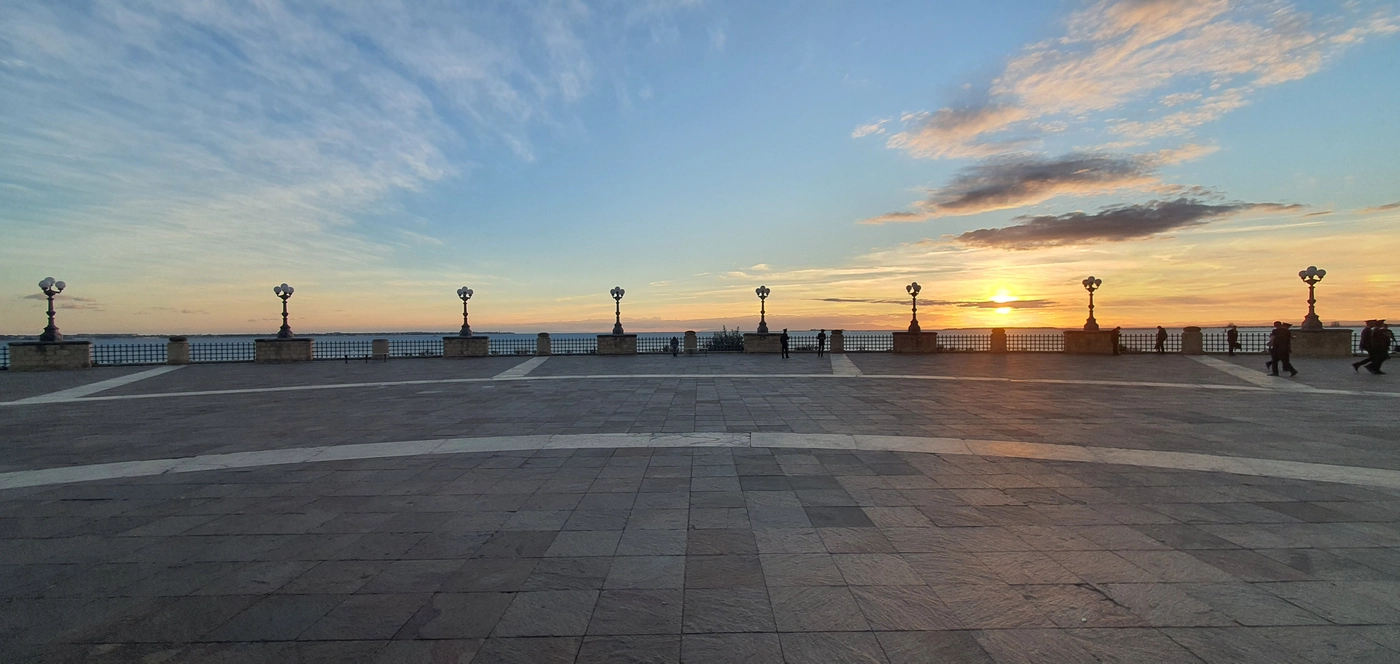 Rotonda del LungomareUn luogo di Taranto
 PrimomarePrimomare Taranto è una location vista mare a San Vito, ideale per pranzi, cene, aperitivi