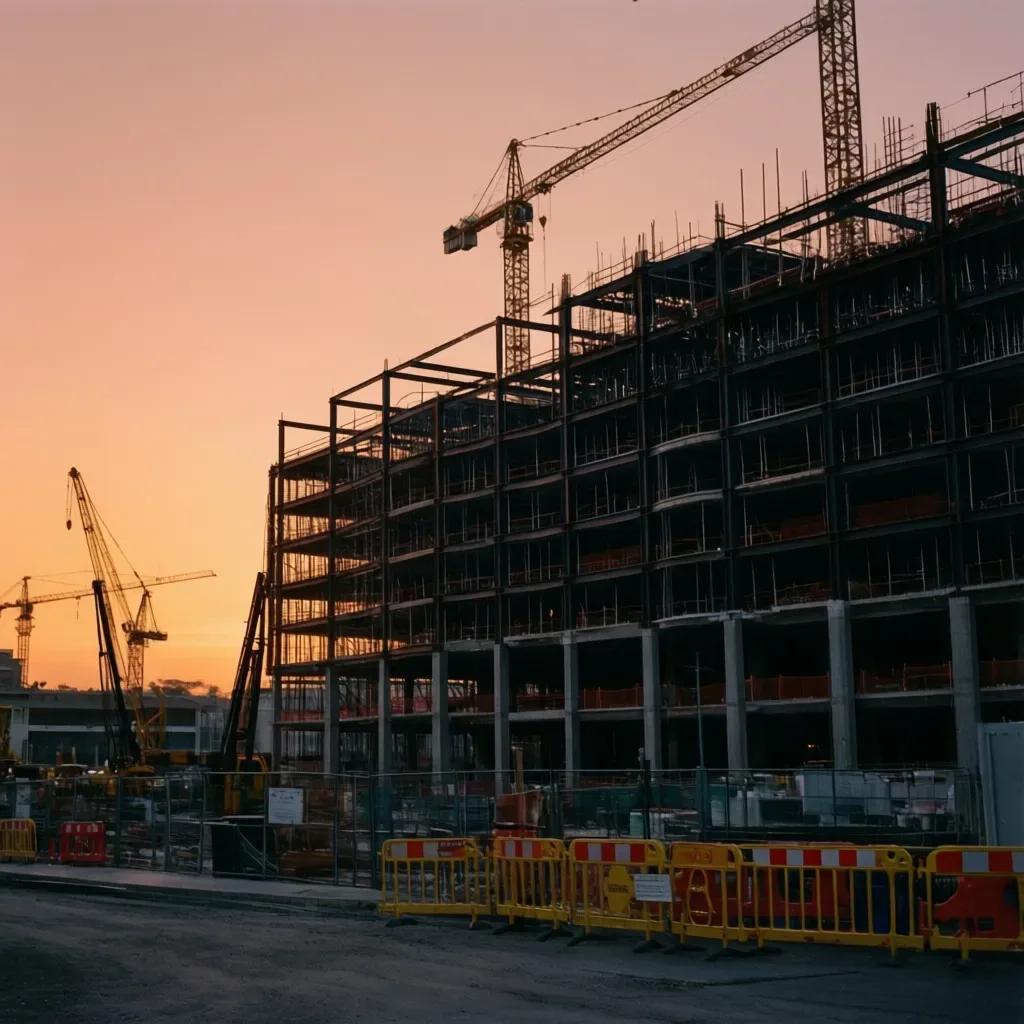
During the broadcast In Prima Linea on Antenna Sud, the regional health councilor Donato Pentassuglia confirmed that there are no delays for the opening of the new San Cataldo hospital in Taranto, which is scheduled to become operational in the first quarter of 2028. This statement comes to reassure citizens and healthcare workers after years of waiting and uncertainty over a facility that represents one of the most anticipated infrastructure projects for the city.
Donato Pentassuglia is the regional health councilor for Puglia, tasked with coordinating hospital planning across the entire region. His statement aims to dispel the doubts that have long circulated among the people of Taranto regarding the actual completion of the San Cataldo. Alongside him in managing the project are the commissioner of the Taranto Local Health Authority (ASL) and the technicians from the Technical Management area, who have provided a detailed report to the regional commissions on the status of the work.
Councilor Pentassuglia filed a technical report with the regional commissions (I and III) detailing the updated timeline and deadlines for the work. According to the report, the new San Cataldo hospital should open its doors to the first patients no earlier than the first quarter of 2028, i.e., between January and March of that year.
The statement came following requests for hearings made by Taranto regional councilors Renato Perrini (Brothers of Italy) and Antonio Paolo Scalera (League), who have long been demanding clarity on the actual progress of the work and the concrete timeline for activating the facility. As Scalera pointed out at the start of the proceedings: "One year after the task force was established, the reality of the new hospital remains uncertain and in many respects unsatisfactory. We need to know the real state of progress of the work, the outcome and timing of the tenders for the fittings".
The San Cataldo represents a crucial project for the Taranto healthcare system, awaited for over a decade. The idea of building a new hospital dates back to 2012, when the first 140 million euros were allocated. Over the years, additional funding followed: a 2014 resolution by the Regional Council allocated another 67 million euros, and a further 35 million euros were set aside for technological equipment and biomedical devices.
For a city like Taranto, marked by years of difficulties in the healthcare sector and a population that has had to contend with the consequences of industrial pollution linked to Ilva, a modern and efficient hospital facility represents a concrete response to the health needs of the area. The opening of the San Cataldo will also entail the reorganization of the Santissima Annunziata hospital, which will undergo a transformation in its role within the local healthcare system.
However, the trust of Taranto's citizens is severely tested. As emerges from comments on social networks, many remain skeptical: "No delays... Are we joking?", "People no longer trust anyone after listening to empty talk", "Come on, to be safe let's say 2030". This skepticism is not unfounded: the project has accumulated significant delays over the years, with repeated postponements of the original deadlines.
In the coming months, the regional commissions will continue to monitor the progress of the work. Several aspects still need to be clarified: the completion status of secondary works (systems and diagnostics), the outcome of the tenders for the fittings, and above all the actual timeline for activating the wards once the structure is completed.
The date of the first quarter of 2028 represents an important deadline, but the history of the San Cataldo teaches us that it is prudent to wait for concrete facts before declaring victory. The coming months will be decisive in verifying whether this time Councilor Pentassuglia's promise will match the reality on the construction sites.
What is certain is that Taranto needs this facility, and that the Taranto community will continue to demand transparency and concrete results, not just reassurances.
Source: AntennaSud