A fire that illuminates and one that devours. It is from this image suspended between progress and destruction that "Prometeo a Taranto. La fabbrica illuminata" is born, a show in its national premiere that will take place on September 24 and 25 at 9 PM in the TaTÀ auditorium, in the heart of the city, as part of the Taras Teatro Festival directed by Massimo Cimaglia.
It is no coincidence that this national premiere takes place in Taranto. The port city, with its heavy industrial past and the still-open challenges linked to the steel plant, becomes the perfect stage to tell the myth of Prometheus not as a remote story, but as a mirror of its own history.
The director is Joscha Zmarzlik, a German director from the Opera To Go company, who chose to build a hybrid show: not just theater, not just music, but a work that blends documentary, mythological storytelling, and direct testimony.
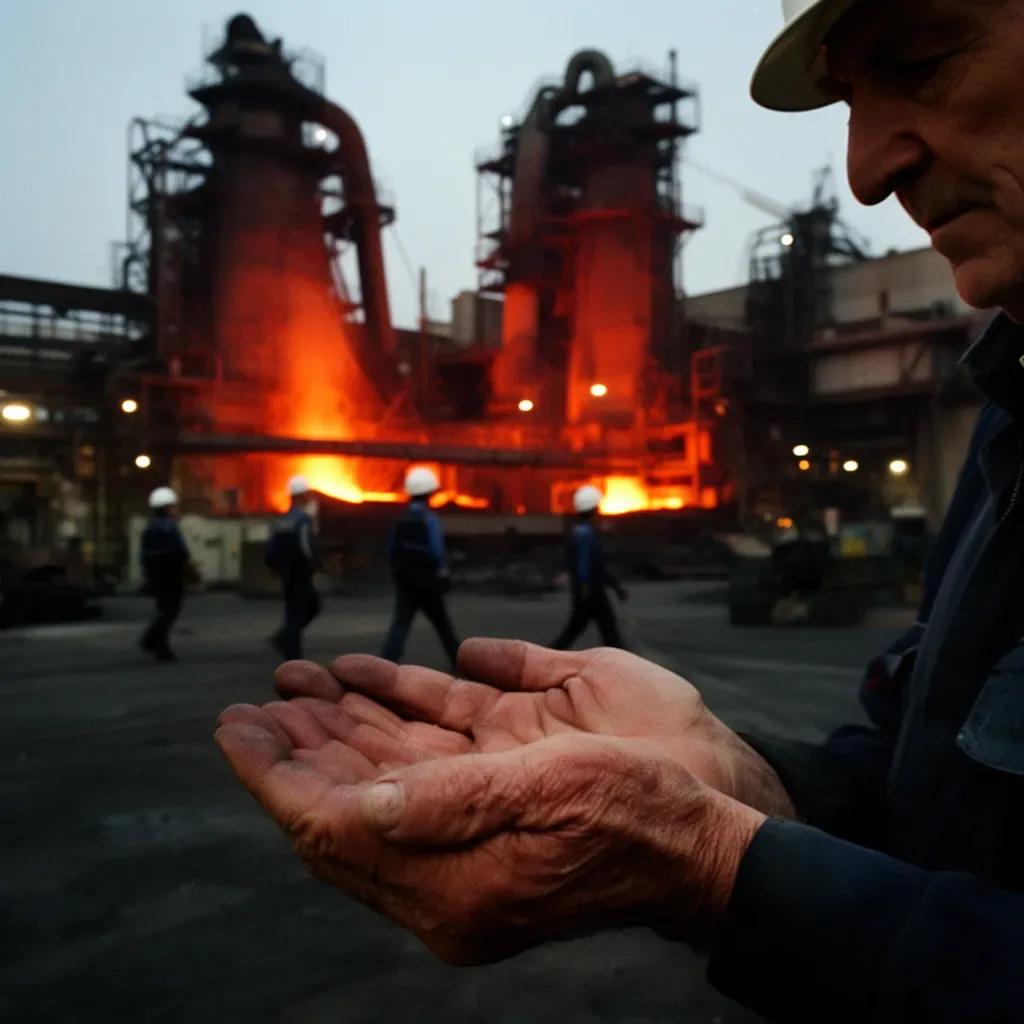
Alongside him on stage will be soprano Niki Lada, who will perform music that is complex and dense with meaning. But the true heart of the show is a choir made up of fifteen Taranto citizens: Pasquale Basile, Marco Bianco, Margherita Buono, Massimo Cardellicchio, Perla Calassi, Maria Pia Cazzolla, Marcella D'Alconzo, Domenico Brisci, Federica Brisci, Sabrina Donvito, Francesco Omma, Fabrizio Ricchiuto, Marco Russo, Andrea Simone, and Maria Rana. Some of them are workers from the former Ilva steel plant. They are not professional actors: they are the real inhabitants of Taranto, bearers of concrete stories and memories.
The project takes its cue from "La fabbrica illuminata", a composition for voice and magnetic tape created by Luigi Nono in 1964. Nono had directly recorded the sounds and voices of workers inside the Italsider plant in Genoa, turning the work into a denunciation of alienation in large factories. The score, first presented on September 15, 1964, at the Teatro La Fenice in Venice, was so radical that RAI imposed an absolute veto on the texts and canceled its broadcast: a case of state censorship.
More than sixty years later, Zmarzlik takes up that score and puts it in dialogue with the myth of Prometheus and Pandora, in the versions by Aeschylus and Hesiod, and with texts by Giuliano Scabia and Cesare Pavese. The result is a new dramaturgy that links classical myth to the industrial history of Taranto.
In the myth, Prometheus steals fire from the gods to give it to humanity, allowing it to progress, smelt metals, and build civilization. But Zeus punishes him with eternal torment: an eagle devours his liver every day, and every night the liver grows back.
In Taranto, this metaphor takes on dramatic weight. The "fire" becomes the arrival of the great factory in the 1960s, welcomed as the great gift of modernity and economic well-being. But as in the myth, that gift came at a very high price: the city lives the continuous cycle between the need for work and the right to health, an open wound that seems to regenerate without ever reaching a definitive solution.
The show relates the theme of large-scale industry to the right to health, the dignity of work, the environment, and the search for a sustainable future. The factory is not represented as a mere physical place, but as a symbol of a culture of progress capable of producing development and, at the same time, profound consequences on the lives of people and territories.
Just as Nono had directly collected the testimonies of workers inside the Genoese factory, Zmarzlik chose to entrust part of the narrative to the inhabitants of Taranto. The choir becomes the human center of the show: not an external representation of the city, but a living presence that tells what it means to live and work in a territory marked by industrialization.
Their voices will intertwine with those of ancient and modern authors, transforming individual experiences into a collective story. Suffering is not the only dimension: the choir also becomes a space for awareness and possibility, up to the search for what the show defines as a new "ecological collectivity", capable of holding together environment, health, work, and social justice.
The arrival of this show represents a significant moment for local culture. Rarely do theater, city, and industry intertwine so deeply in a story. It is not just about the stage, but about a place that has too often been at the center of controversy, yet never told with such artistic intensity.
The show fits into the ongoing debate on Taranto's industrial transition, the collective memory of Ilva, and the still-unresolved challenges related to health, environment, and employment. Theater becomes a tool for knowledge, dialogue, and stimulation for the community, called to confront real problems through the language of music, words, and myth.
Institutions and cultural operators have welcomed this national premiere with interest, aware of the symbolic and social value of the initiative.
Dates: September 24 and 25, 2026, at 9 PM
Venue: Auditorium TaTÀ, Taranto
Box Office: open from 10 AM to 1 PM and from 3 PM to 6 PM
Tickets: also available through the Vivaticket network
A show that speaks of Taranto in Taranto, giving the floor to those who live that story every day.