1,247 samples and 126 non-compliances in fifteen years, all in the First Inlet. Now the data show that transferred mussels return to compliance on their own
Twenty months of experiments, a full year of monitoring, batches of mussels moved from one stretch of sea to another and resampled at regular intervals. The result fits in a single line: if mussels from the First Inlet of the Mar Piccolo are transferred to the Mar Grande, dioxins and PCBs disappear within thirty days. And the product loses nothing, neither in weight nor in flavor.
The final results of the project “Evaluation of decontamination rates in batches of mussels” were presented on July 6, 2026, at the Prefecture in Taranto. It is the kind of news that in Taranto weighs more than a medal: it concerns the trade that more than any other defines the city, and a ban that has lasted for fifteen years.
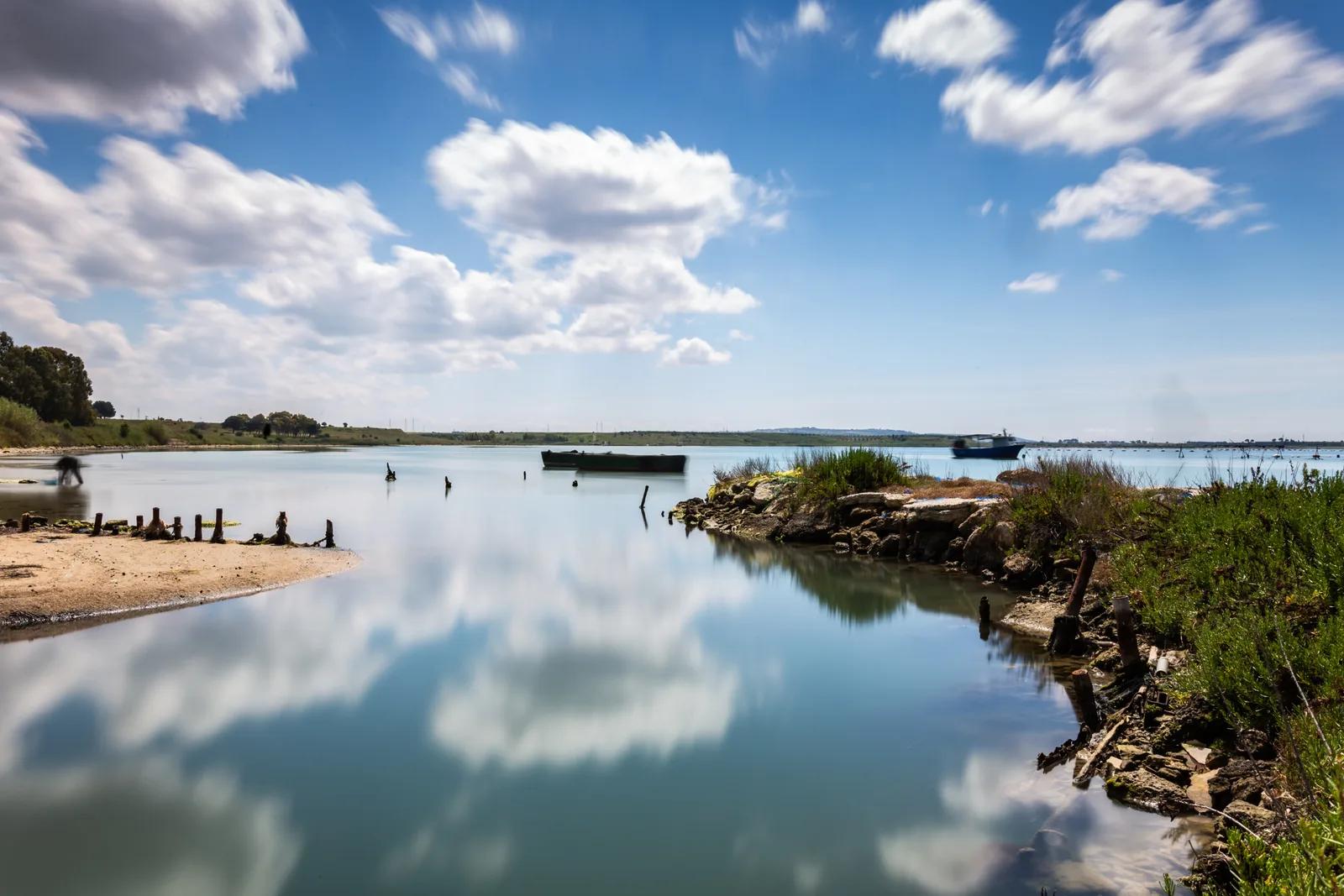
It all stems from Regional Ordinance no. 1989 of 2011, which, after the discovery of dioxins and PCBs exceeding legal limits, blocked the movement of mussels farmed in the First Inlet of the Mar Piccolo. The problem is not the mollusk: it is the sediments. As explained by the Prevention Department of the ASL of Taranto, the cause lies in the “contamination of sediments present in the First Inlet of the Mar Piccolo of Taranto which, once suspended, are copiously filtered and accumulated in the organisms of the mollusks.”
The mussel is a tireless filter feeder: it sifts through liters and liters of water and retains whatever it finds inside. In summer it gets even worse, because “the increase in sea temperatures, the metabolism of the mussels, and their fat content leads to an accumulation of contaminants whose levels exceed legal limits.” The novellame, i.e., young mussels, do not have the same problem: they filter less and remain in the water during the cold months, when bio-accumulation does not start.
The numbers from the checks tell the geography of the problem well. Since February 2011, the Veterinary Service of the ASL has carried out 1,247 samplings of mussels in the three classified areas — First Inlet, Second Inlet, and Mar Grande — finding 126 non-compliances with legal limits, “exclusively in mussels farmed in the First Inlet.” All there, nowhere else.
The project was funded by the Extraordinary Commissioner for remediation and by the CIS Taranto, and carried out jointly by ARPA Puglia, ASL Taranto, Port Authority, and CNR-IRSA, the Water Research Institute. Activities ran from November 2024 to June 2026.
The method is simple in concept and lengthy in execution: batches of mussels from the First Inlet are taken, transferred to the Mar Grande, and resampled at 15, 30, and 45 days, measuring PCBs, dioxins, and dioxin-like compounds each time. This is repeated over a full year-long monitoring cycle to capture the different biological and physiological phases of the mollusk — because a mussel in March and a mussel in August are not the same mussel.
The transfer triggers what researchers call a rapid natural clearance: the mollusk, placed in clean water, cleans itself. In the project summary, “at 15 days a drastic biological dilution effect of dioxin and PCB contamination is observed, which stabilizes at zero between 30 and 45 days.”
The extraordinary commissioner Vito Uricchio emphasized that the data offer “reassuring answers on food safety” and represent “a solid technical-scientific support to mitigate the impact of the regional ordinance”: proof, he added, that “the environment and the economy can regenerate together.”
For the mayor Piero Bitetti, these are “scientific certainties awaited for years” from a sector that is the history and economic soul of the city, and which shows “extraordinary biological resilience.” Dario Iaia, sole responsible for the Institutional Development Contract, put the ball where it belongs: the results “will provide politics with objective elements to make courageous, scientifically based, and definitive management choices.”
The general director of ARPA Puglia Vito Bruno spoke of “a concrete example” of the One Health approach, one that brings together environment, health, productive activities, and social fabric instead of treating them as separate compartments. The director of the ASL Vito Bavaro confirmed that checks and health surveillance will not be relaxed. And the commander of the Port Authority Leonardo Deri added the phrase that has circulated the most in the city: these data show that “Taranto can and must be told differently.”
The study alone does not change the rules: the decision lies with the Regione Puglia. But it points a clear path, namely moving from emergency management — bans, extensions, derogations renewed year after year — to planned management based on the duration of stay in clean waters.
Two days after the presentation, unions and employers' associations in the supply chain called for acceleration on two points:
In the meantime, the extraordinary health measures and the transfer schedule set by the Region, which had already been extended to March 31 at the beginning of 2026, remain in force.
The black mussel of Taranto is a local population of Mytilus galloprovincialis: a nearly quadrangular shell, shiny black-violet, five to eight centimeters. It grows quickly thanks to the low salinity of the Mar Piccolo, fed by the citri, the freshwater springs that gush from the bottom of the basin and make this sea a unique case in the Mediterranean. The “cozze negre” appear in documents as early as 1525, and organized farming is documented at least since the 1600s.
The cycle has remained essentially the same: the larvae attach to the stramazzi (ropes), the ropes are hung in spring on structures called ventìe and crociere, the mussel farmers practice sciorinatura (airing) every 40-50 days by exposing the pergolas to the air, and it takes from 12 to 16 months to reach the finished product. In 2019, after environmental recovery interventions, the mussels of the Mar Piccolo obtained “A” classification, which allows sale without passing through a purification plant. Today, the Slow Food Presidium brings together 21 mussel farmers around a production protocol aiming for PDO status, while the sector as a whole counts — according to industry estimates — around a thousand operators across farming, selection, distribution, and sales.
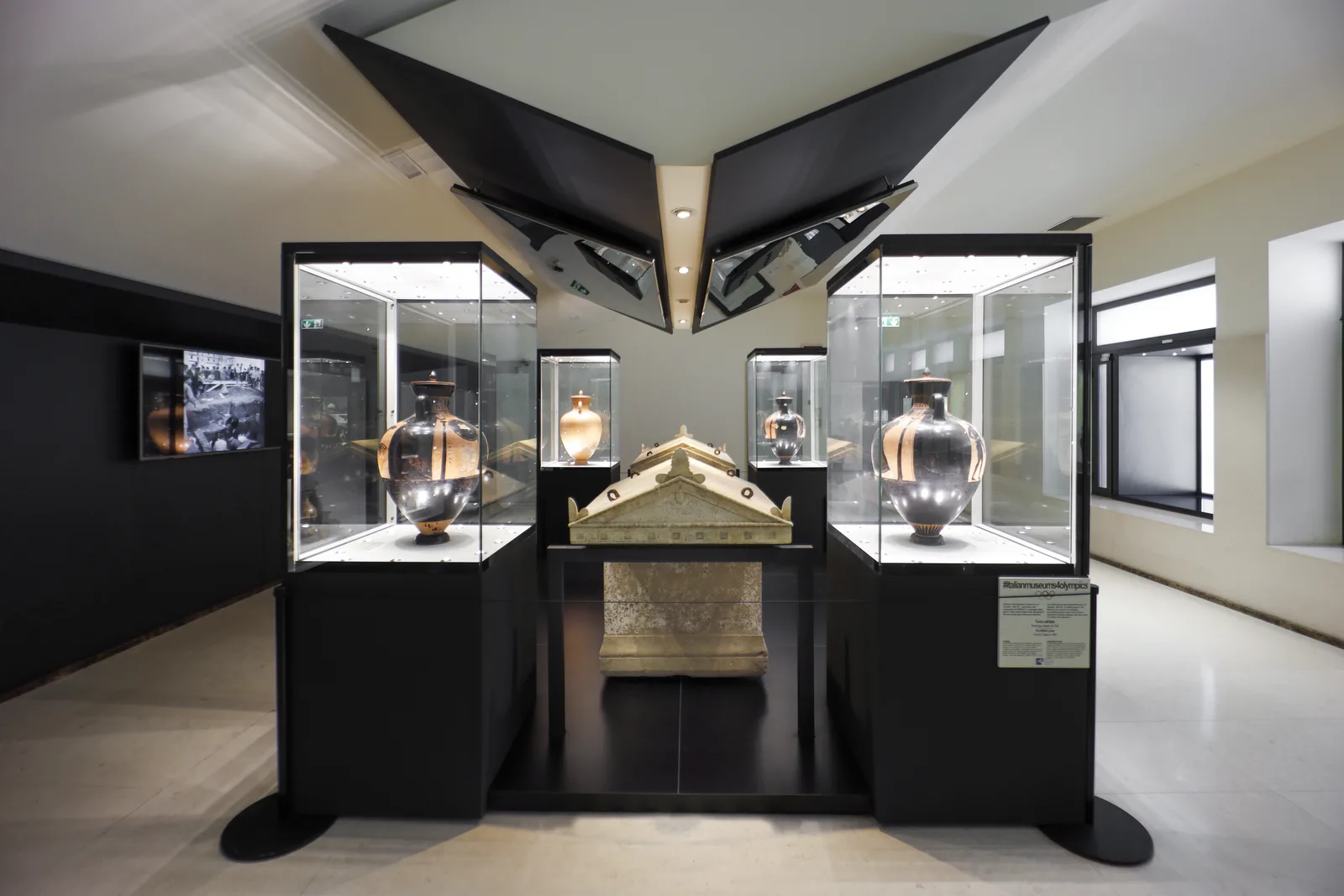
In these weeks, Taranto is full of visitors who have arrived for the Mediterranean Games, and many of them are eating Taranto mussels without knowing any of this. After all, it is an ancient habit: the DNA of the Athlete of Taranto, buried here in the 5th century BC, still preserves traces of mollusks in the dental tartar. The difference is that today, for the first time in fifteen years, instead of a ban there is a number: thirty days.
Photo: Pakycassano, Touring Club Italiano (1934), Diego Delso and Luistxo Fernandez, Wikimedia Commons, CC BY-SA licenses.