The blockades in front of the refinery, the fuel running out, the summons to Rome. And behind it, thousands of families asking what will become of them
For five days, anyone passing on state road 106 in front of the Eni refinery saw the same scene: tents, fires lit at night, men in work jackets taking turns on shifts. They were the workers of the former Ilva. Meanwhile, across half of Puglia, gas stations were running out of fuel and lines were getting longer.
It's easy to remember this week for the disruptions, and the disruptions were real, for everyone. But it's also worth asking why people who have spent a lifetime in the factory decided to sleep on the street in mid-October.
On July 27, the Milan Court of Appeal ordered the hot area—the heart of the plant, where steel is born in the blast furnaces—to be shut down within ninety days. The case was won by a group of parents from Taranto. According to the judges, the asbestos still present in the facilities had to be removed by August 23, and fine particulate matter must truly be reduced. Requests to suspend the decision were rejected, and since October 9, the hot area has stopped producing. The ninety-day deadline falls at the end of the month.
For those who work there, the math is simple: without the hot area, the factory in Taranto is gone. Acciaierie d'Italia has already placed 3,800 people in Taranto on furlough, many at zero hours, and the request also involves 4,200 workers in the supply chain: the external cleaning, maintenance, and transport companies that depend on what the factory buys.
On Monday, October 12, the unions Fim, Fiom, Uilm, and Usb called a strike at all group plants. In Genoa and Novi Ligure, it lasted a day or two. In Taranto, it went on indefinitely, with pickets on state road 7, next to the factory, and on state road 106, in front of the refinery gates.
The choice of location was no accident. On average, 260 tanker trucks leave the Taranto refinery every day, supplying much of the South. Blocking it meant being heard all the way to Rome. Within days, Eni said, more than half of its service stations in Puglia had run dry, the airports of Bari and Brindisi declared a fuel shortage, and in the city, Kyma Mobilità had to leave only school buses on the road.
A protest like this weighs on everyone, and the workers knew it. They did it because they felt they had no other way to be heard.
On October 13, the government approved a decree: furlough pay rises to 70% of salary, from October through June 2027. It's a help, but the workers deemed it insufficient, for a reason that is immediately clear. Nine months at 70%, and then what? The decree protects the present but doesn't say what happens next. The demands are different:
Behind the numbers are stories that everyone in Taranto knows. A year ago, in Avvenire, Francesco Cassanelli, 55, with 29 years in the factory, said: "I've been on furlough since 2012. I alternate weeks of work with weeks of forced stoppage." A worker from a subcontracting company said he earned 1,100 euros a month and paid half of it on his mortgage. For families like these, 70% of an already small salary makes the difference between making it and not making it.
Then there is the fear of no longer being useful to anyone. The state has been trying to sell the former Ilva for years. Over the summer, a group of Italian companies came forward for the plants, but without the hot area. Those who have spent twenty years next to a blast furnace wonder what job they will find, at fifty, in a city where the factory has been the safe place for three generations.
And there is a wound that makes everything harder. These men have breathed the same dust as their neighbors, and many have worked among asbestos. None of them denies the health problem. They ask not to be left alone to pay the price of the solution.
On Thursday, October 15, ten buses left Taranto for Bari. At the Region, President Antonio Decaro, Mayor Piero Bitetti, the Province, the unions, and regional councilors from both the majority and opposition signed a common document. "We are all on the same side," Decaro said, "on the side of health and on the side of work." Bitetti called for overcoming the conflict between health and work, two rights both written in the Constitution, and added: "Our territory has given a lot, has suffered and still suffers."
That same evening, the government's summons arrived: Tuesday, October 27, at 5:00 PM, at Palazzo Chigi. That was what the workers were asking for. The next day, in an assembly, they decided to immediately remove the blockades in front of the refinery, to get the tanker trucks moving again, and at 11:00 PM on Friday, October 16, the strike ended.
Fuel is returning to the pumps. The workers' questions, however, are still waiting for an answer. They are the same as any family's: how much will come in at the end of the month, whether there will still be a job, what future their children will have in this city. Questions that deserve respect from everyone, even from those who spent this week waiting in line at the gas station.
Sources: TarantoToday (Eni and the gas stations), TarantoToday (the document at the Region), Il Sole 24 Ore, Affaritaliani, Il Post, Cittadini Reattivi (the Court of Appeal decree), Avvenire (November 2025).
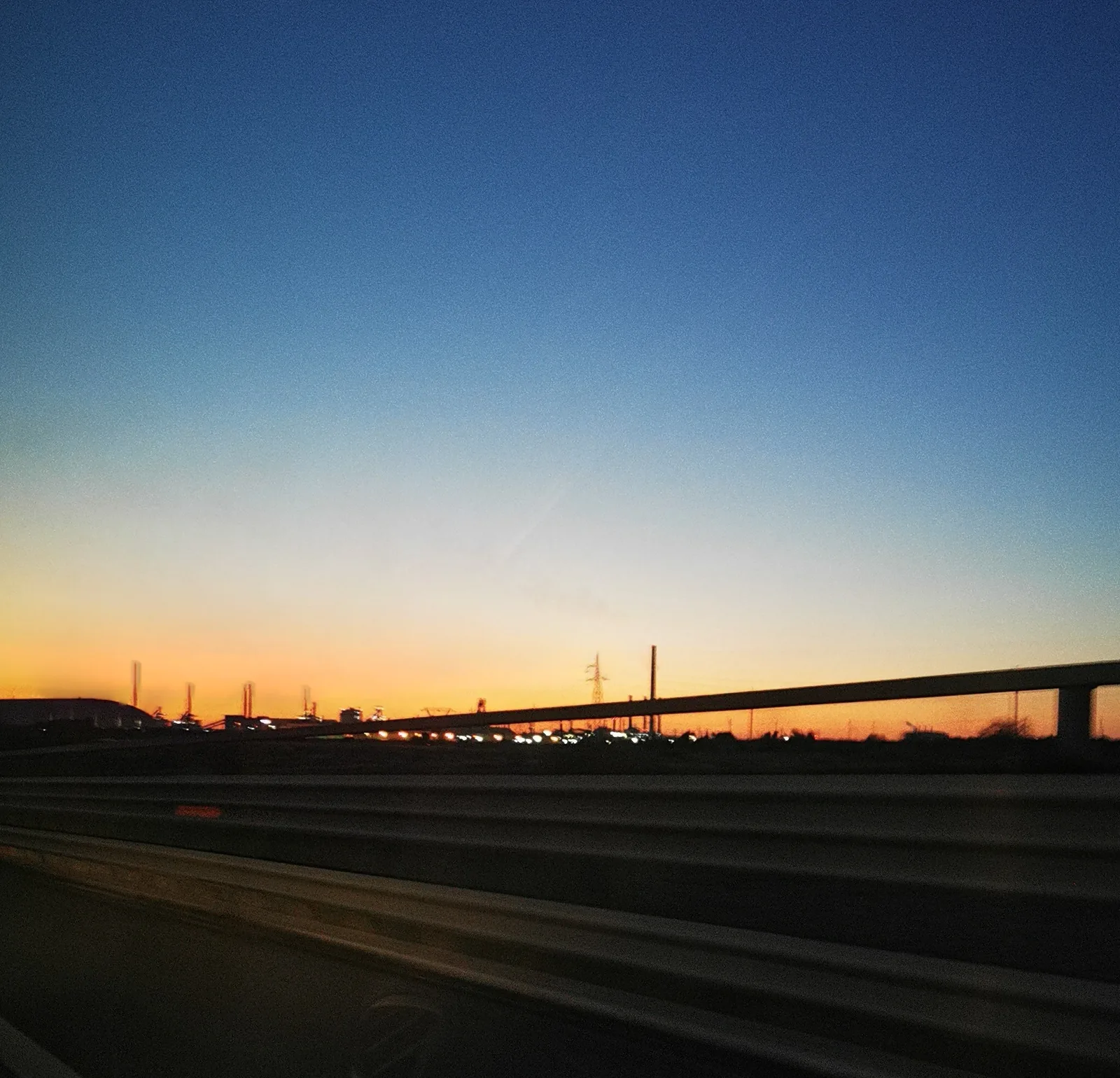
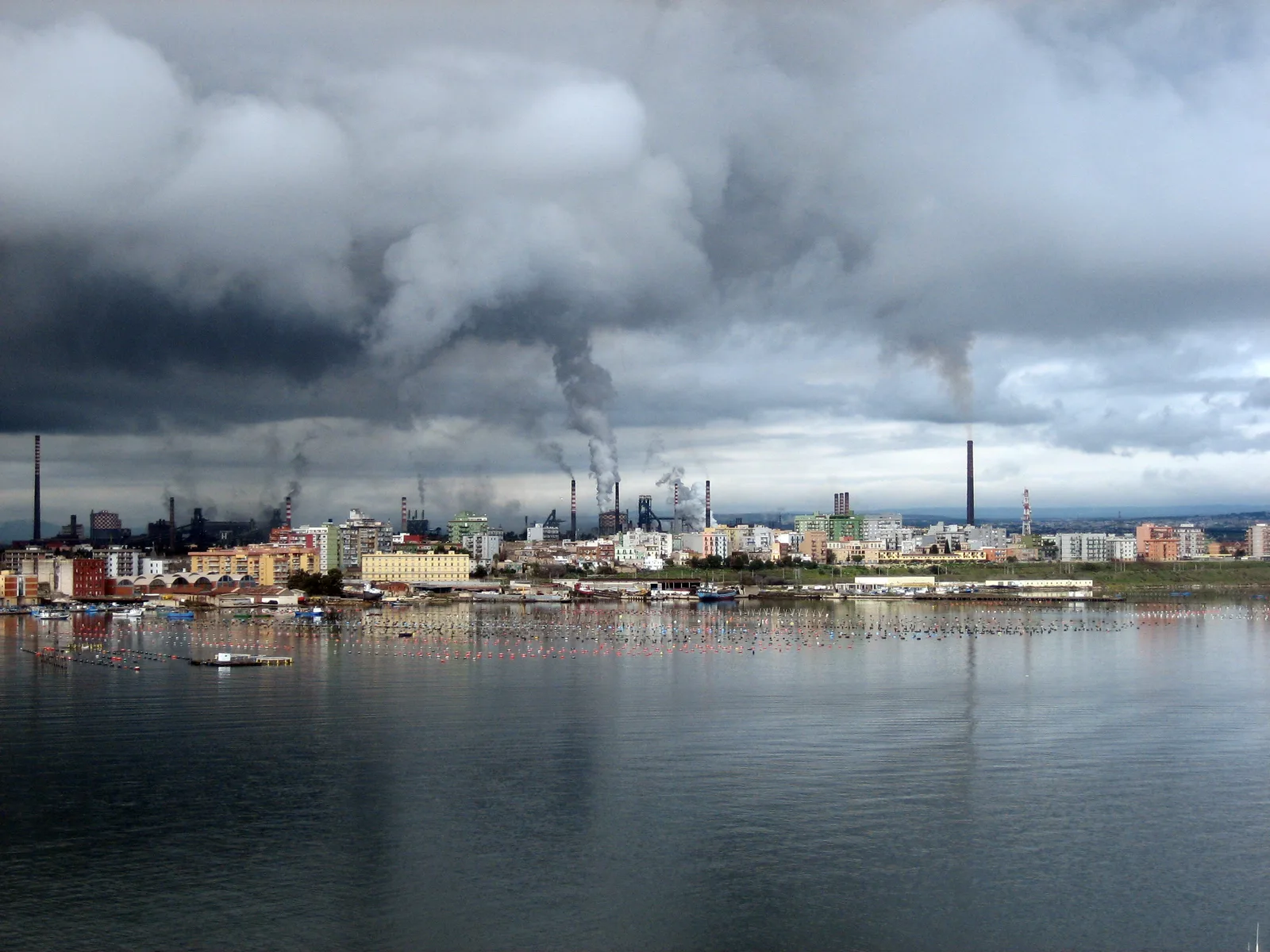
Photo: the plant at dusk seen from the road. Saggittarius A, ILVA Taranto crepuscolo (2024), CC BY 4.0, via Wikimedia Commons. A worker inside a pipe for quality control, Italsider steel center in Taranto, 1963: unknown author, Touring Club Italiano, Photo ITALSIDER steel center in Taranto, CC BY-SA 4.0, via Wikimedia Commons.