Nearly 29 megawatts across Taranto, Faggiano, Roccaforzata, Monteparano and Carosino. Time to submit observations runs until October 10
Yesterday we told you about the Monticelli batteries. Today it's the wind's turn, and that's no coincidence: the two projects arrived three days apart and share the same deadline, October 10.
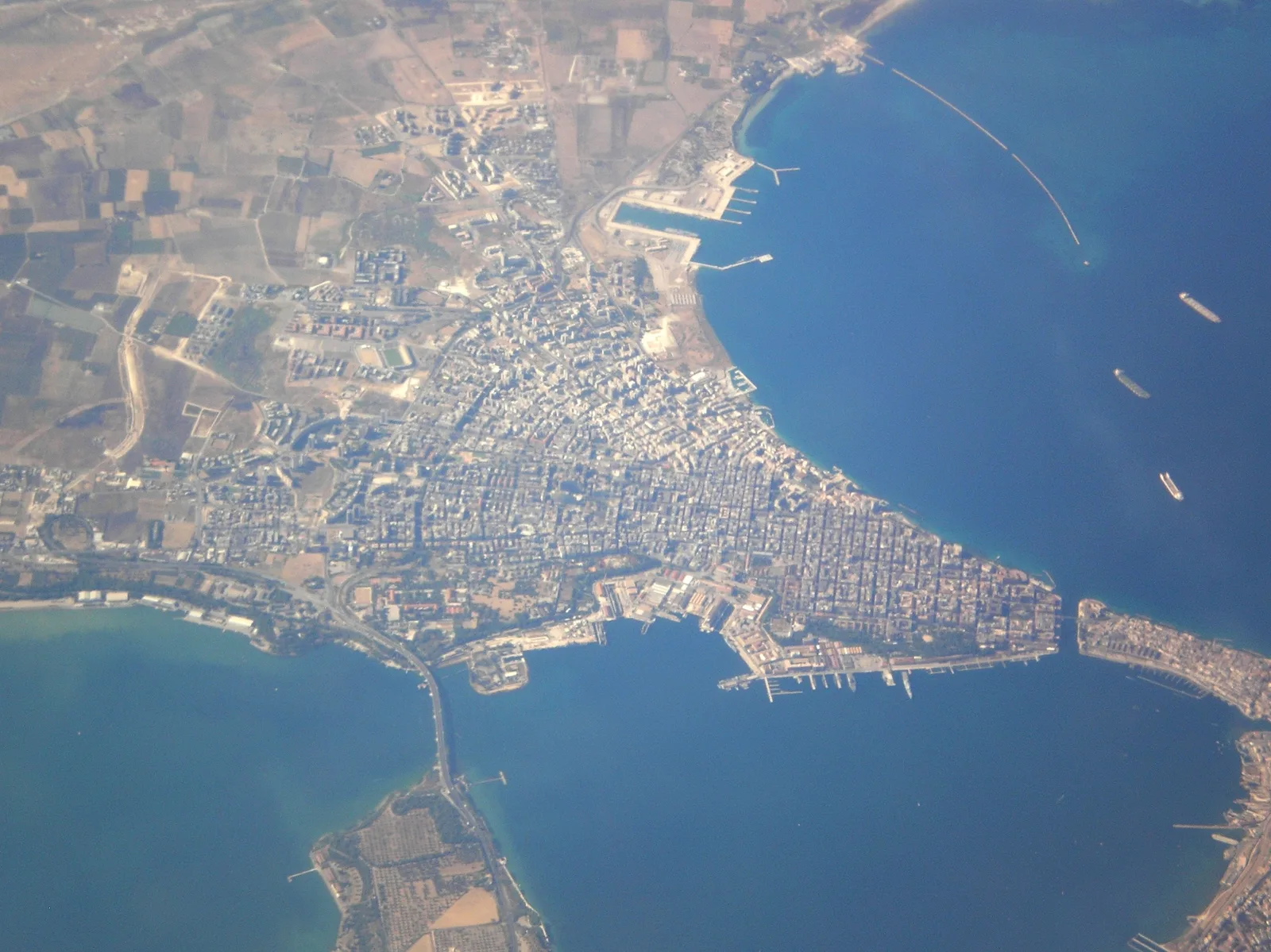
It's called San Donato and it's a wind farm with a capacity of 28.80 megawatts, including the cables and infrastructure to connect it to the grid. It doesn't sit within a single municipality: it crosses five — Taranto, Faggiano, Roccaforzata, Monteparano and Carosino — that stretch of inland countryside where the towns look alike and the land is the same.
How many turbines? The document doesn't say. It states the total capacity but not the number of machines, and that's not a detail you can guess: it depends on the chosen size. The full documentation is public and downloadable, and anyone who wants to know exactly where each tower would go can look it up.
Here the two stories go hand in hand. The sun produces at noon, the wind blows mostly at night: they're two sources that take turns. But neither produces when we decide — they produce when it happens. That's why a wind farm and a power storage facility like the one in Monticelli are the same conversation: without the latter, the former only works during the hours the weather allows.
Puglia has known this for twenty years: it's among the regions in Italy that produce the most energy from wind. This isn't an experiment to try out; it's a trade it already practices.
It's worth stating both, without taking sides.
In favor. A turbine burns nothing: while it turns, it produces no fumes, no dust, no carbon dioxide — and in a province that has learned what it means to breathe in a factory, that's not a footnote. The ground beneath a tower stays farmable: the base takes up a few meters, the rest of the field keeps growing wheat or olives.
Against. The first objection is the landscape, and it's not an aesthete's whim: turbines are visible for kilometers, they change the skyline of a countryside that is also a tourist product and an identity. Those who live there have the right to say so. Then there's the noise, which exists and is audible near the machines. There are birds and bats, which, with migratory routes and the Mar Piccolo (the "Little Sea") just steps away, isn't a theoretical issue — and that's exactly why the procedure includes an impact assessment on protected areas. And there are the connection works: the cables and substations often touch more ground than the towers themselves, and that's the part least talked about.
Finally, the limit wind has by nature: it produces when it blows. That's a real flaw, and the answer isn't to give up — it's to pair it with storage facilities. One ring only closes with the other.
Here too, a clarification that matters: it's not the Municipality of Taranto that decides. The authorization is handled by the Province of Taranto, which gathers all the necessary opinions into a single decision — environmental impact assessment, impact on protected areas, landscape authorization, and the clearances from the fire department, the aqueduct, Anas, the Navy, Snam, the Mar Piccolo Park, and the land reclamation consortium. It's called a unified procedure precisely because it brings them together instead of running them one after another.
In three days, two energy procedures have started on the same stretch of territory, with the same deadline. It's a coincidence, but it says something that isn't: the energy landscape of this province is being drawn now, and the moment citizens have a voice is this one — one month, in writing.
The question isn't "yes or no to renewables": that's already decided, in Europe and on the bill. It's where, how close to what, and who gets heard before, not after. Thirty days are worth more than three hundred comments after the fact.
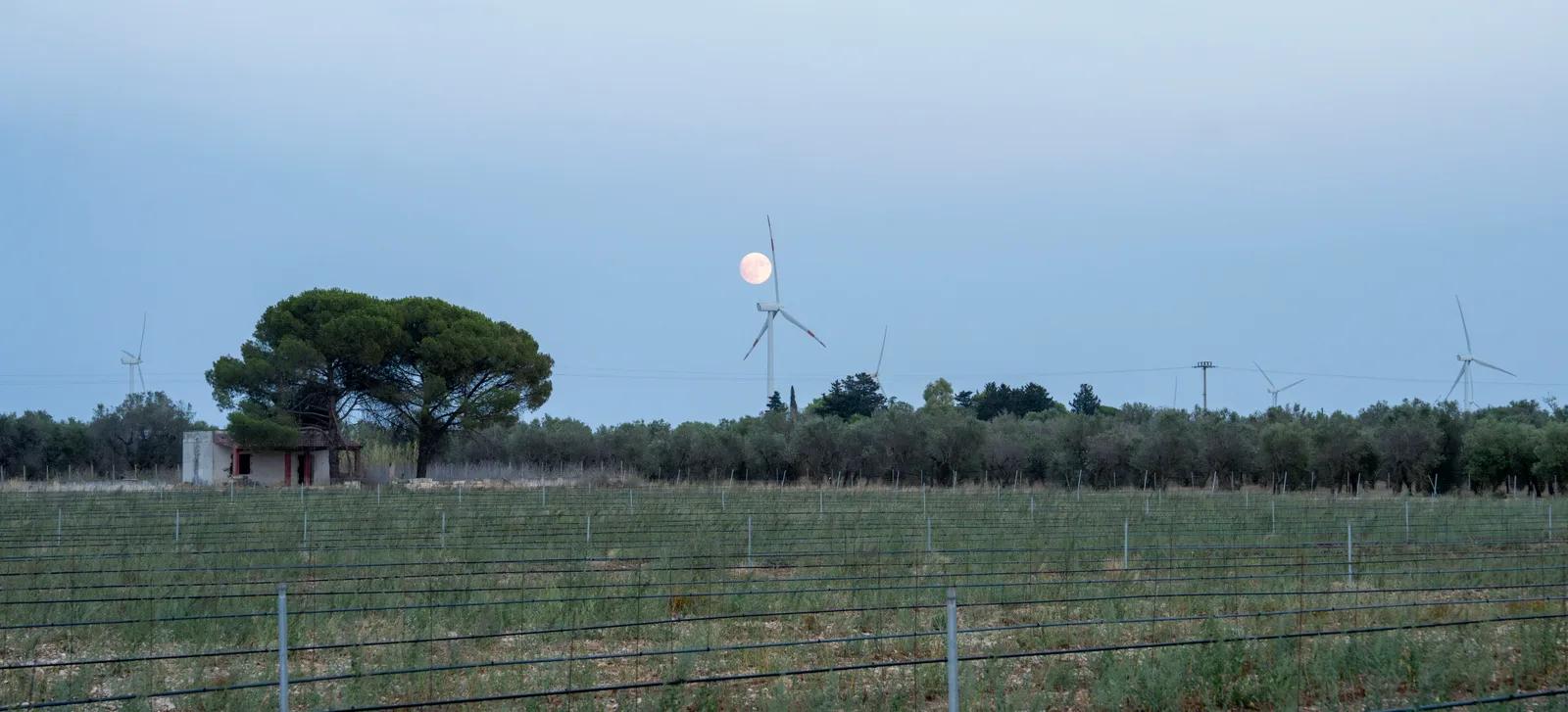
Photo: FalantoTaras, Wind farms in Salento, Wikimedia Commons, CC BY 4.0 license. The image shows existing installations in Salento, not the San Donato project.