A 100-megawatt facility to store electricity and release it when needed. Landowners in the area have until October 10 to have their say
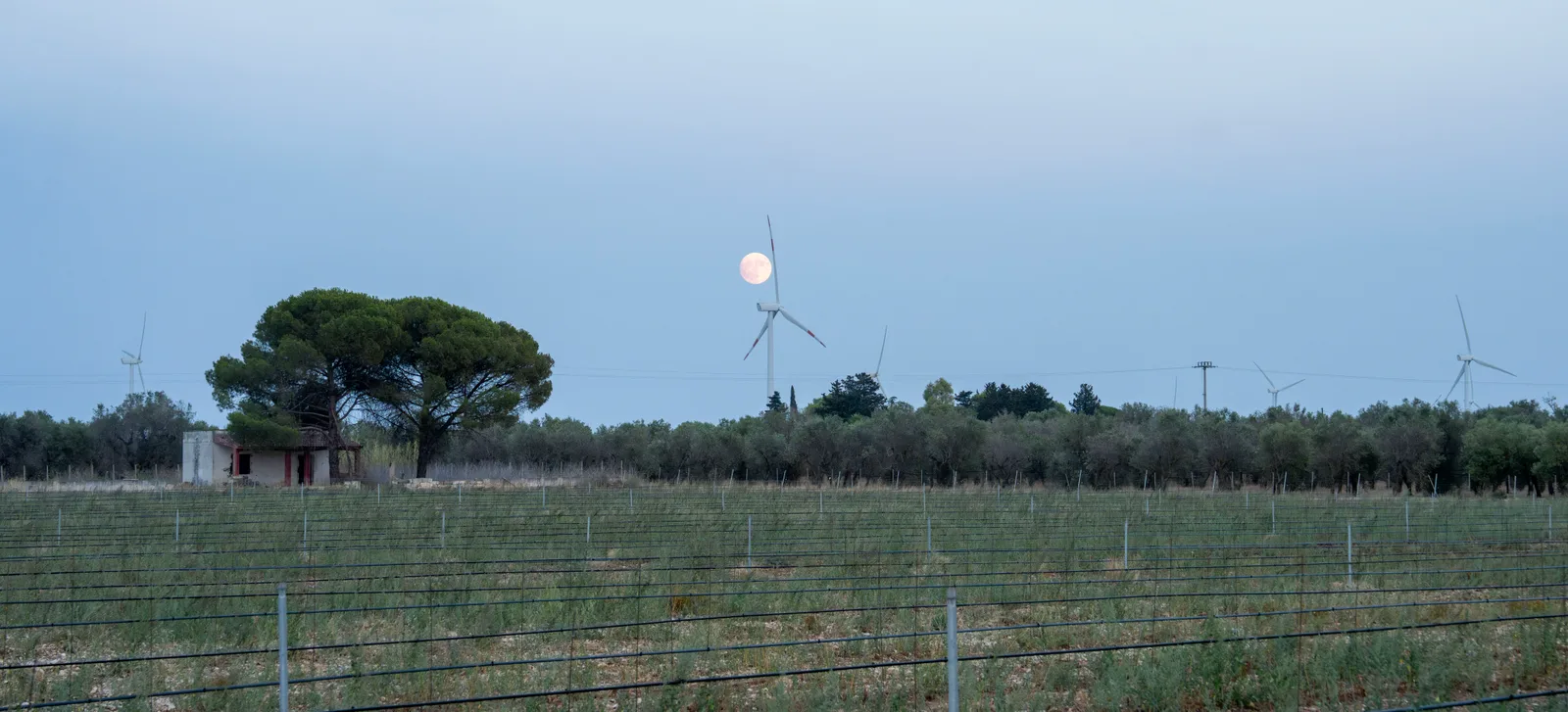
Monticelli is countryside. It lies outside Taranto, where the city unravels and the working land begins: olive groves, arable fields, drystone walls. It's not a place that makes the news. Until yesterday.
On those fields, a facility never seen before in Taranto is planned: a 100-megawatt electrochemical storage system. In plain English, a warehouse for electricity.
Electricity has a flaw that sets it apart from almost everything else: it must be consumed the instant it's produced. There's no closet to store it away. As long as power plants burned something, it wasn't a problem: you burned more when more was needed. With sun and wind, it's the opposite. The sun peaks at noon, the wind blows at night when homes are asleep, and the most frustrating thing happens: clean energy, already produced, is thrown away because no one wants it at that moment.
A facility like the one in Monticelli serves this purpose. It takes the current when there's too much, holds it, and gives it back in the evening when everyone comes home and turns things on. It doesn't produce energy: it shifts it in time. For a region that has sun and wind to spare, this is the difference between producing a lot and using a lot.
There's an irony that won't be lost on anyone in Taranto: this city knows chemistry. It has breathed it, measured it, counted it, and learned to read technical terms with the suspicion of someone who has already been fooled at least once.
Now another one arrives. Lithium instead of coal, containers lined up in a field instead of a smokestack: no smoke, no cloud changing color at sunset. It's a different kind of chemistry, and it must be said that it is different. But it asks for the same thing everyone before it has asked for: a piece of land.
Here lies the real question, the one without an easy answer. About eighty-four thousand square meters — twelve football fields — are currently agricultural land; tomorrow they would be infrastructure. And the future the facility brings is no nobler than the one an olive grove brings: they are two futures, on the same soil. It must be said, however, that the land isn't just taken: compensation is planned for expropriation and easements, and part of the areas are only needed during construction.
An important clarification: this is not a decision by the Municipality of Taranto. The authorization is handled by the Puglia Region, which is competent for facilities of this type; the project was presented by a private company. The municipalities involved are two, Taranto and Carosino, because the connection cables to the grid cross the territory of both.
The part that concerns those who own those lands is this, and it's worth reading carefully.
Those thirty days are not an obstacle: they are the part of the procedure that exists precisely so that landowners can have their say before things are decided. A written observation enters the file and must be evaluated. A complaint made afterward does not.
Taranto has spent fifty years on a single question: how much is work worth, and what does it cost. The current one resembles it but is not the same: it's no longer just "is it worth it?", it's "where do we put it." A facility that stores energy is, for once, a machine that takes nothing from the air: without warehouses, panels and turbines remain a nice gesture that only works at certain times. Yet it remains true that every infrastructure sits on a piece of the world that was doing something else. The difference, this time, is that there is a month to say it — and that saying it matters.
Photo: Qurren, Nirazuka Battery Storage Power Station, Wikimedia Commons, license CC BY-SA 4.0. The image depicts a Japanese storage facility, not the one planned in Monticelli.